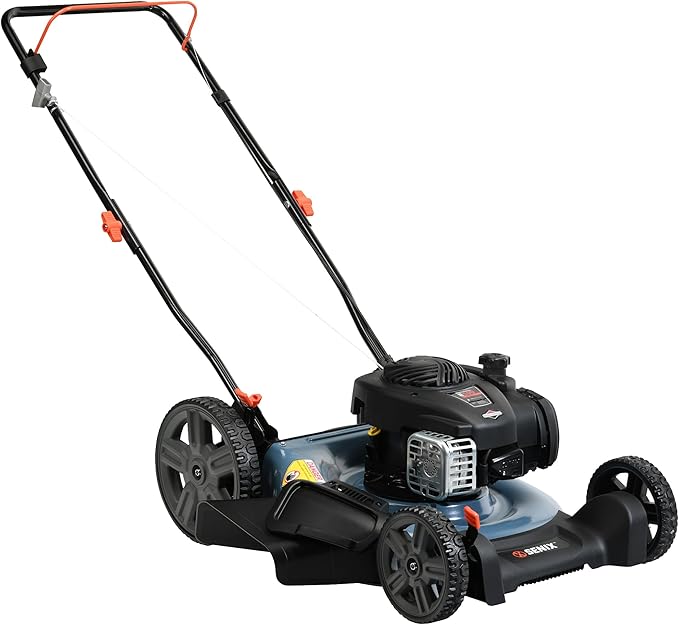
Gas Powered Push Lawn Mowers Stats
- Total Products Audited: 13
- Brands Represented: 6
- Lowest Price: $195.00
- Typical Price: $259.99
- Highest Price: $390.00
When you purchase through links on our site, we may earn an affiliate commission.
Market Class Distributions
Winnowl Index Distribution
| Rating Level | Products | Market Share |
|---|---|---|
| ELITE | 1 | 7.69% |
| STRONG | 1 | 7.69% |
| AVERAGE | 3 | 23.08% |
| MEDIOCRE | 7 | 53.85% |
| DEFICIENT | 0 | 0.00% |
| GHOST | 1 | 7.69% |
Performance Distribution
| Performance Level | Products | Market Share |
|---|---|---|
| Exceptional | 0 | 0.00% |
| Strong | 2 | 15.38% |
| Average | 7 | 53.85% |
| Mediocre | 4 | 30.77% |
| Weak | 0 | 0.00% |
Market Value Index (MVI) Distribution
| Value Tier | Products | Market Share |
|---|---|---|
| Exceptional | 0 | 0.00% |
| Strong | 2 | 15.38% |
| Fair | 4 | 30.77% |
| Mediocre | 7 | 53.85% |
| Weak | 0 | 0.00% |
Brand Strength Distribution
| Brand Tier | Products | Market Share |
|---|---|---|
| Exceptional | 0 | 0.00% |
| Strong | 0 | 0.00% |
| Average | 9 | 69.23% |
| Mediocre | 3 | 23.08% |
| Weak | 0 | 0.00% |
| Zero | 1 | 7.69% |
Price Range Distribution
| Price Range | Products | Market Share |
|---|---|---|
| $195 - $249 | 4 | 30.77% |
| $250 - $299 | 7 | 53.85% |
| $300 - $354 | 1 | 7.69% |
| $355+ | 1 | 7.69% |
Spec Guide
Click a spec below to see how our experts evaluate these ranges.
Engine Displacement Guide
| Range | Product Count | Market Share | Evaluation |
|---|---|---|---|
| Up to 135 cc | 2 | 15.38% |
Impact: You will likely find the motor stalling or "dropping revs" if you try to push through thick grass at a normal walking pace Analysis: Entry-level displacement. While light, these sub-135cc engines lack the torque required to maintain blade speed in anything but dry, short grass. |
| Over 135 up to 155 cc | 9 | 69.23% |
Impact: You should find the engine maintains steady power for standard weekly maintenance without adding excessive weight to the machine Analysis: Standard push mower displacement. This 140cc-150cc range is the sweet spot for manual mowers, balancing ease of push with reliable cutting force. |
| Over 155 up to 175 cc | 1 | 7.69% |
Impact: You should effectively power through tall fescue and overgrown patches without the engine struggling Analysis: High-torque output. Typically featuring 160cc+ engines, this tier provides a professional-level performance buffer for homeowners who don't mow on a strict schedule. |
| Over 175 cc | 1 | 7.69% |
Impact: You will likely find the engine is more capable than the person pushing it, maintaining high RPMs in almost any residential condition Analysis: Over-built power plant. Large displacement engines in a push configuration are geared toward maximum longevity and clearing thick, neglected brush. |
Cutting Width Guide
| Range | Product Count | Market Share | Evaluation |
|---|---|---|---|
| Up to 20 inches | 3 | 23.08% |
Impact: You will likely spend more time on the lawn and walk significantly further to finish the same area compared to a full-size deck Analysis: Compact cutting path. These 18-19 inch decks are intended for very small yards or navigating tight garden beds where space is a premium. |
| Over 20 up to 21.1 inches | 10 | 76.92% |
Impact: You should effectively balance total work time with a machine that is still light enough to maneuver manually Analysis: Industry standard width. The 20-21 inch deck is the proven benchmark for push mowers, offering the best ratio of efficiency to physical effort. |
| Over 21.1 inches | 0 | 0.00% |
Impact: You should be able to finish the lawn in fewer passes, though you will likely feel the extra weight when turning or pushing uphill Analysis: Wide-path efficiency. Anything over 21 inches in a manual push configuration is designed to maximize square footage per hour at the cost of agility. |
Warranty Guide
| Range | Product Count | Market Share | Evaluation |
|---|---|---|---|
| Up to 2 Years | 12 | 92.31% |
Impact: You will likely be on your own for repair costs if the carburetor or ignition system fails after just a few seasons Analysis: Minimal protection. For a tool with high vibration and thermal stress, a sub-2-year warranty suggests a lower-tier build quality. |
| Over 2 up to 3 Years | 1 | 7.69% |
Impact: You should feel reasonably protected against common manufacturing defects during the first several years of use Analysis: Standard residential backing. This 2-year window is the market average and covers the most likely period for manufacturing issues to surface. |
| Over 3 up to 5 Years | 0 | 0.00% |
Impact: You should expect the manufacturer to stand behind the machine's mechanical integrity for the majority of its useful life Analysis: Strong manufacturer commitment. A 3-4 year warranty is a sign of a robust engine and a deck built to withstand long-term use. |
| Over 5 Years | 0 | 0.00% |
Impact: You should have total peace of mind that this mower is built to be a multi-decade tool rather than a disposable purchase Analysis: Exceptional long-term backing. This tier is rare for push mowers and usually indicates a premium brand with a high-tier "No-Start" guarantee. |
Cutting Height Adjustment Guide
| Range | Product Count | Market Share | Evaluation |
|---|---|---|---|
| Up to 5 settings | 2 | 15.38% |
Impact: You will likely find it difficult to adjust for different grass types or to avoid "scalping" uneven parts of your lawn Analysis: Basic height control. Limited settings (usually 3 or 4) offer very little flexibility for proper seasonal turf management. |
| Over 5 up to 7 settings | 10 | 76.92% |
Impact: You should be able to easily dial in a healthy height for most common suburban grass species Analysis: Standard precision range. Offers the necessary granularity to transition between low-growth spring and high-growth summer periods. |
| Over 7 settings | 1 | 7.69% |
Impact: You should effectively be able to fine-tune your lawn's appearance with the precision of a professional landscaper Analysis: High-precision adjustment. Geared toward enthusiasts who demand specific heights for optimal root health and curb appeal. |
Our Ranking Methodology
To calculate the Winnowl Index for these 13 models, we use a data-driven audit based on Dynamic Peer-Group Benchmarking. Our scoring is built on three pillars:
- Performance - Driven by Engine Displacement, Cutting Width, Warranty, Cutting Height Adjustment.
- Market Value Index - A "Performance-per-Dollar" ratio based on the typical class (median) price ($259.99).
- Brand Strength - Measures three primary sub-indices: Trust, Reliability, and Customer Support.
Read more about our Methodology